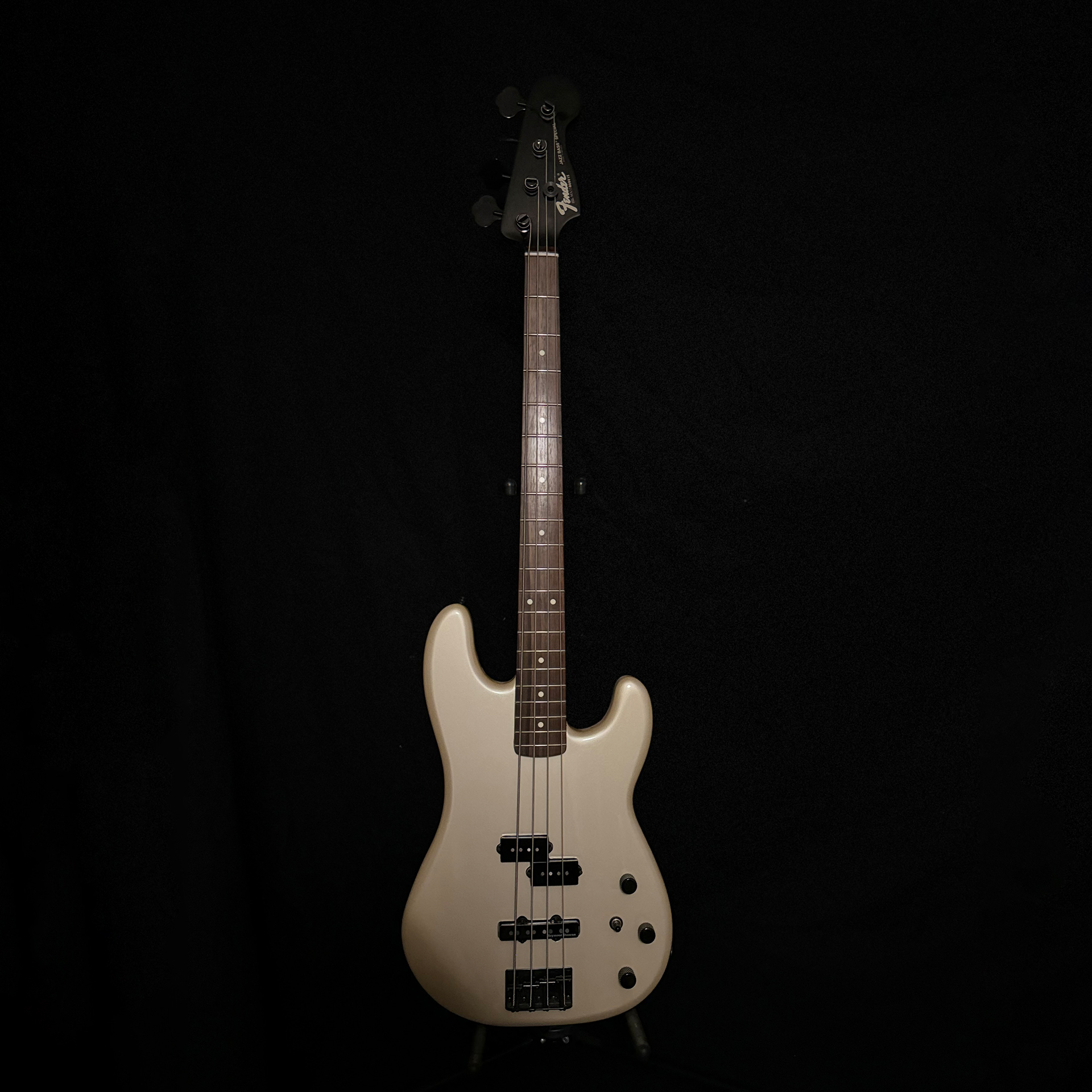
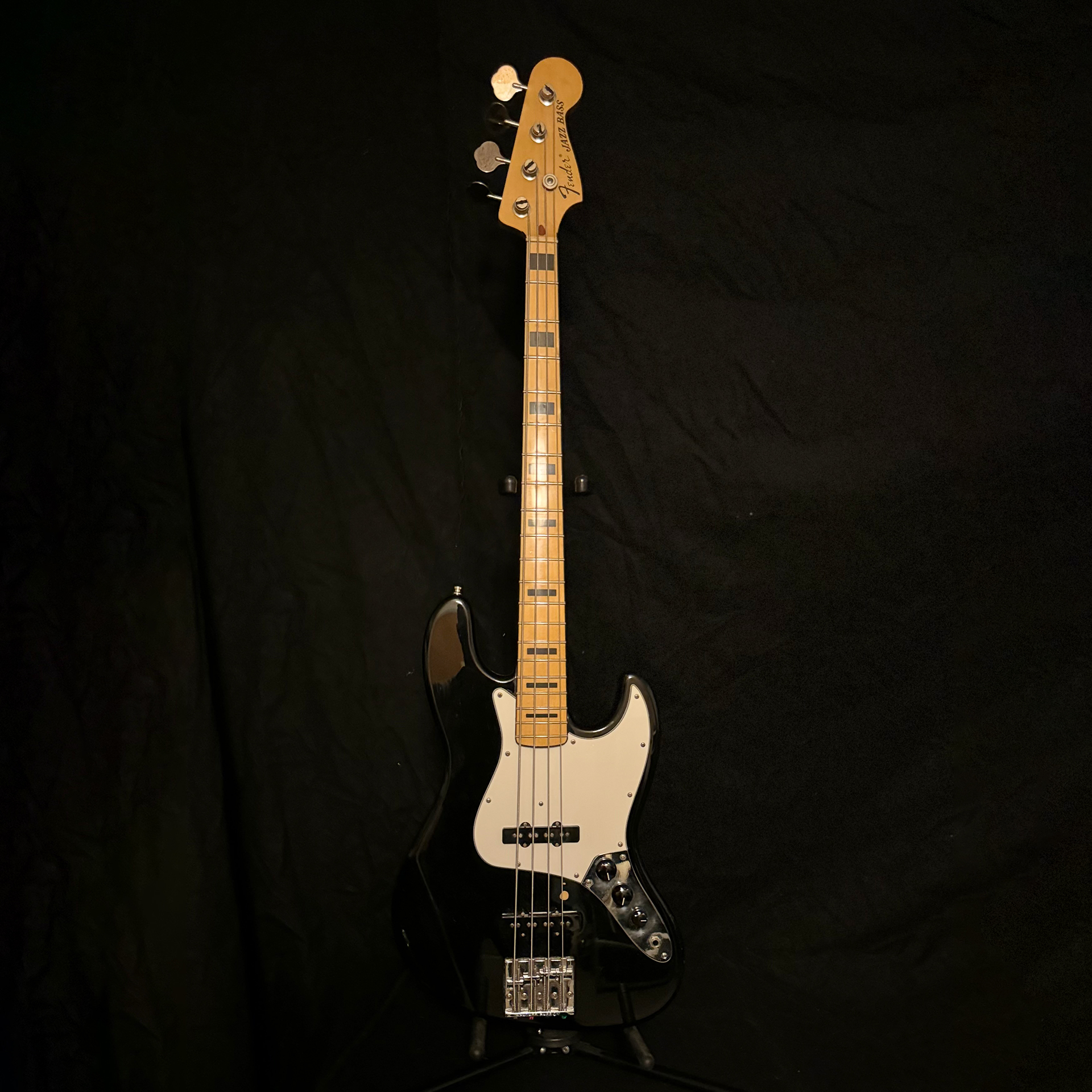
2018 Fender Hama Okamoto Precision Bass #4, Olympic White (MIJ)
Year: 2018
Finish/Color: Olympic White
Made in: Japan (MIJ / Made in Japan)
Factory/Plant: Dyna Gakki
Body: Basswood, gloss polyester
Neck: Maple, U profile, 38,1 mm nut (measured)
Fingerboard: Rosewood, 7.25″ radius, 20 frets
Pickup: Vintage-Style Split Single-Coil Precision Bass®
Scale: 34″ long scale
The Hama Okamoto “#4” is Fender Japan’s signature Precision Bass for the OKAMOTO’S bassist, built to the spec of his own 1968 P-Bass: a Precision body and split-coil pickup carrying a 38,1 mm Jazz-width neck. The full story is in my guide to the Hama Okamoto #4, along with the other two in the vault.

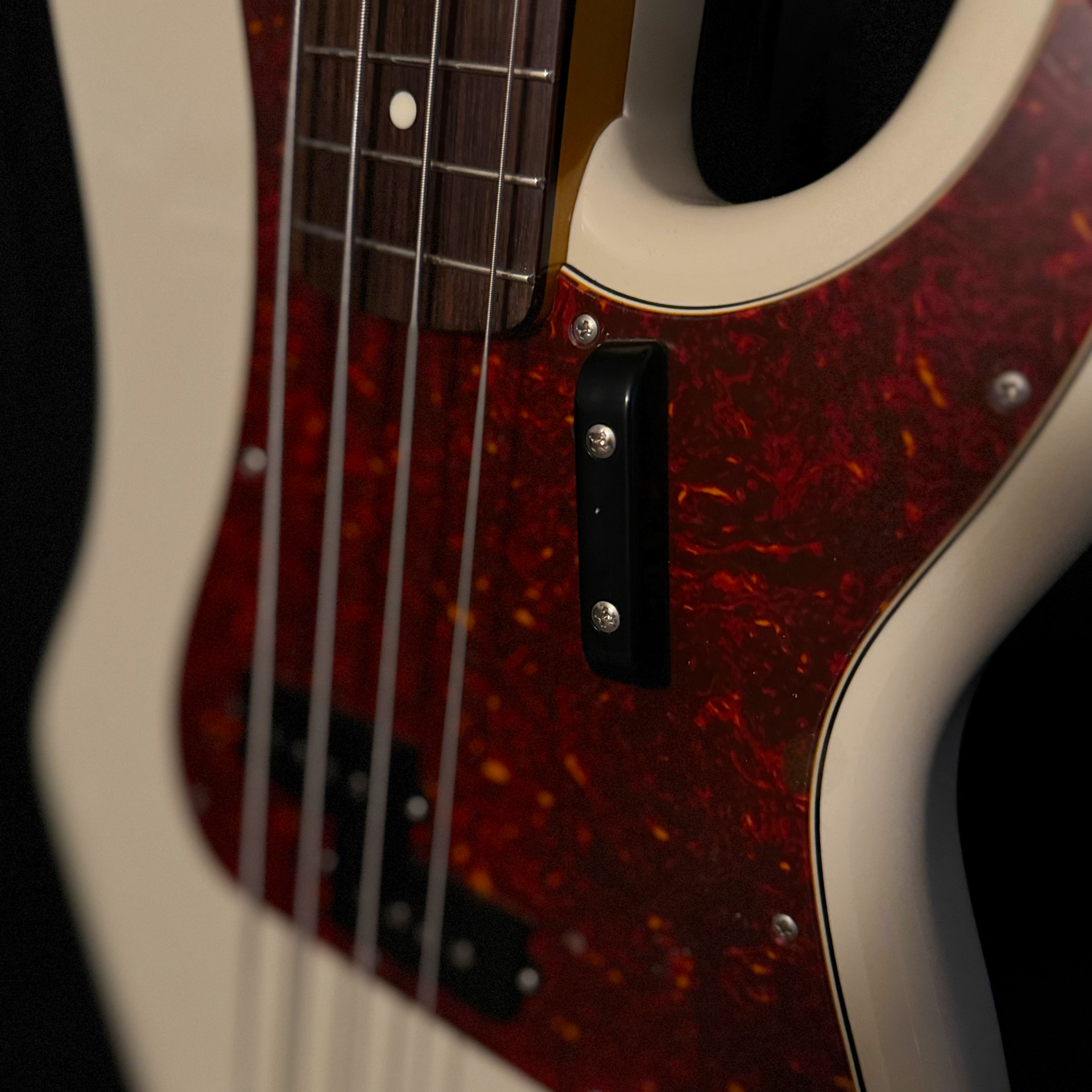
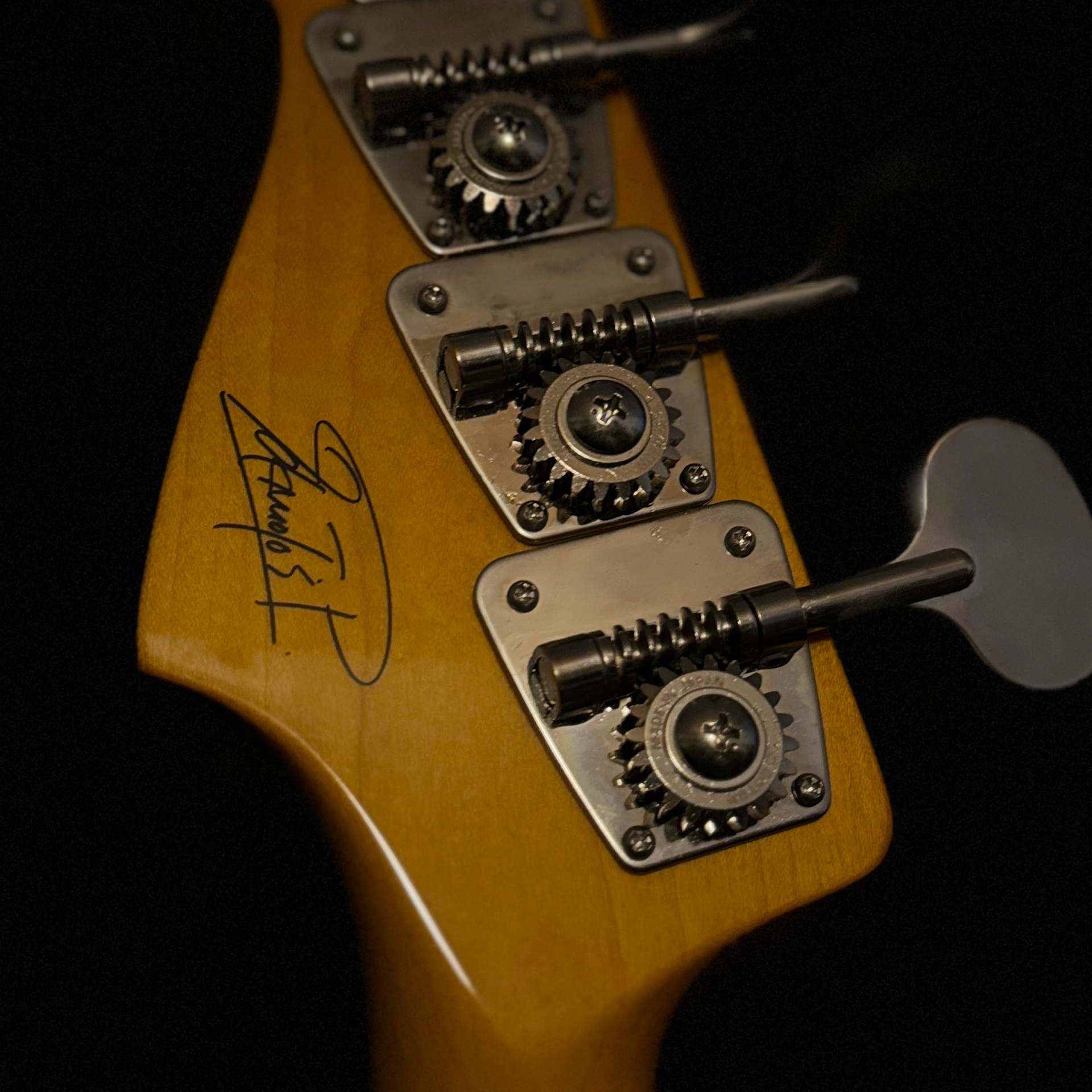

The year the white arrived
For the first two years of production the #4 came one way: 3-Color Sunburst, take it or leave it. Olympic White joined the range in 2018, which makes this the first year you could buy one – and makes the finish a dating shortcut in its own right. A white #4 cannot be an early example. If a listing pairs Olympic White with a 2016 or 2017 date, one of those two details needs checking.
It is also the version that looks like the point. The #4 exists because Okamoto wanted his 1968 Precision reproduced, and a late-’60s P-Bass in Olympic White with a rosewood board is about as close as the reference gets. The sunbursts are the same instrument in different clothes; this one wears the original’s.
One difference the homage does not carry over: a genuine 1968 in Olympic White would be nitrocellulose, and sixty years later it would have ambered into something closer to cream. This is gloss polyester. It is still the white it left the factory as, and it will stay that way.
The other #4s in the vault The 2016 and 2017, both in 3-Color Sunburst.
Spotted in the wild: the Hama Okamoto #4 Olympic White on location
Its Sunburst sibling came along too, but the Olympic White is the one that does the work in the dark. Shot in The Old Orchard Basement Storage, a dim fruit cellar beneath a Funen photo studio, where a white Fujigen P-Bass is essentially the only light source in the room.
2018 Olympic White #4 FAQ
2018. The first two production years were 3-Color Sunburst only, so Olympic White is the later of the two finishes and this is a first-year example of it. That makes the colour useful for dating: a white #4 is 2018 or after, no exceptions I have found.
It had fewer years to accumulate. Sunburst ran from the start of production in 2016; Olympic White only from 2018, so there is simply less of it in circulation and it turns up less often in Japanese listings.
No. A 1968 Precision in Olympic White was sprayed in nitrocellulose, which ambers with age – which is why genuine vintage examples are closer to cream than white today. The #4 is finished in gloss polyester, so it holds the colour it was built with. If you want the aged look you will have to wait considerably longer than the instrument will last.